
Commercial Access Control Systems in Toronto
AMT Systems designs, installs, and supports the commercial and industrial access control systems Toronto and the GTA businesses rely on — keyless entry with key fobs, cards, PIN codes, mobile credentials, and biometrics, plus video intercoms, visitor management, electronic door hardware, and cloud-managed access control. You decide who can access each door and when, with a time-stamped record of access activity.
With more than 14 years of hands-on security and systems integration experience, we serve offices, warehouses, industrial sites, condos, healthcare facilities, retail stores, and dealerships. As a commercial security integrator, we can also integrate access control with your security cameras and alarm systems. For an itemized, no-obligation quote, book a free on-site assessment or call 647-601-0777.
What Is a Commercial Access Control System?
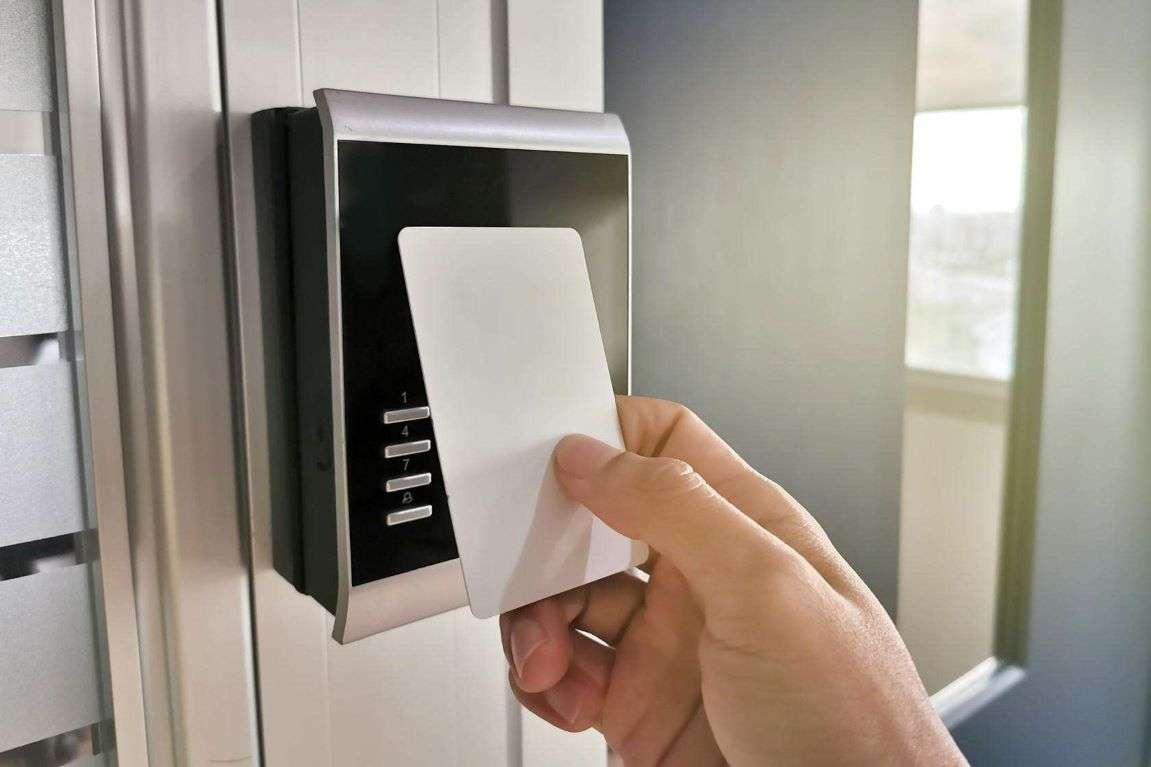
A commercial access control system determines whether a person is authorized to enter a controlled door and records the access event. A typical system includes a credential reader, electronic locking hardware, a door controller, and management software used to manage users, schedules, permissions, and audit trails. Depending on the system, access rules are stored locally in the controller or other on-site hardware so doors can continue operating even if the internet connection is temporarily unavailable.
For your business, that means less reliance on mechanical keys. If a fob, card, or mobile credential is lost or an employee leaves, access can be revoked without re-keying the door. Authorized and denied access attempts can also be recorded, giving administrators a searchable history of who used a credential, where, and when.
Access Control Solutions We Install
Key fob and card access
Smart cards, proximity cards, and encrypted fobs provide convenient employee access while allowing lost or cancelled credentials to be deactivated without re-keying the door.
Biometric access control
Fingerprint or facial recognition can provide additional identity verification for higher-security areas where biometric access is appropriate.
Mobile & cloud-based access
Use compatible smartphones as credentials while managing users, permissions, schedules, and access activity remotely.
Keyless entry and PIN keypads
Code-based entry for doors where physical credentials are unnecessary or as an additional authentication factor.
Visitor management & audit trails
Manage temporary access and maintain time-stamped records of credential activity for access administration and incident review.
IP video intercom & door entry
See and speak with visitors before remotely releasing the door.
Access Control Credential Types Compared
Choosing the right credential depends on the security level, users, doors, and how the system will be managed. Fobs and cards remain practical for many businesses, mobile credentials simplify remote administration, PINs can provide keyless or additional authentication, and biometrics may be appropriate for higher-security areas.
Credential | Security | Best for | Watch out for |
|---|---|---|---|
Key fob | Depends on technology. Modern encrypted fobs are more secure than legacy 125 kHz proximity credentials. | Staff entry in offices, warehouses, condos, and commercial properties. | Older proximity technologies may be vulnerable to cloning. |
Keycard | Depends on credential technology and encryption. | Corporate offices, healthcare facilities, staff identification, and larger organizations. | Lost or shared cards should be deactivated promptly. |
PIN keypad | Moderate when properly managed. Stronger when combined with another credential. | Keyless entry, temporary access, lower-risk doors, or multi-factor authentication. | Shared PINs reduce individual accountability. |
Mobile | High when supported by modern encrypted mobile credential technology. | Multi-site businesses, hybrid workplaces, tenants, and organizations that frequently add or remove users. | Requires compatible readers, mobile devices, and platform support. |
Biometric | High identity assurance when properly implemented. | Higher-security areas requiring stronger verification. | Requires careful consideration of privacy, consent, data retention, and safeguarding. |
Legacy 125 kHz proximity credentials can be more vulnerable to cloning than modern encrypted credential technologies. For buildings still using older access-control technology, upgrading readers and credentials can significantly strengthen credential security without necessarily replacing the entire access control system. Many properties use fobs, cards, or mobile credentials for general staff access while adding PIN-based or biometric authentication where a higher level of verification is appropriate.
Cloud vs On-Premise Access Control
Access control management can be cloud-based or hosted on-site. Cloud-based access control lets authorized administrators manage doors, users, schedules, and activity remotely through a browser or mobile app, making it particularly useful for businesses with multiple locations or frequently changing users. On-premise systems keep the management software and server infrastructure within the property or organization’s network and may be preferred where local control or specific IT and data requirements are important.
Many modern systems are designed so doors can continue processing authorized credentials during an internet outage using locally stored or cached access permissions. Exact offline capabilities depend on the platform and system design. AMT Systems installs both cloud-based and on-premise access control and can recommend the appropriate approach during the on-site assessment.
Managing Users, Schedules & Multiple Sites
Administrators can organize access permissions by user, role, door, location, and schedule instead of managing each door individually. They can assign employees, tenants, contractors, or cleaning crews access based on where they need to go and when. Administrators can also add, change, or revoke credentials centrally, while schedules automatically control access during business hours, evenings, weekends, or other defined periods.
Supported systems can also manage multiple buildings from one dashboard and integrate with controlled elevators, parking gates, and other entry points. Higher-security platforms may also provide emergency lockdown functions that secure designated doors quickly while maintaining required life-safety and emergency-egress operation. Elevator access and lockdown capabilities depend on the platform, system design, and requirements of the property.
Access Control System Cost in Toronto

The number of controlled doors is one of the main factors that determines commercial access control pricing, along with the hardware, credential technology, software, and integrations required for the property. Major cost factors include door count, readers and credentials, electronic locking hardware, controllers, cabling, retrofit versus new construction, and integration with cameras, alarms, intercoms, elevators, or parking access.
Cloud-managed systems may also include recurring software or service fees, while on-premise systems can involve licensing, server, maintenance, or upgrade costs depending on the platform. Every AMT Systems project is quoted according to the actual site requirements following a free on-site assessment.
How Access Control Installation Works
We design access-controlled doors so security does not interfere with required safe egress. We select locking hardware, request-to-exit devices, emergency release, fire-alarm integration, and fail-safe or fail-secure operation based on the door, occupancy, system design, and applicable Ontario Building and Fire Code requirements.
A typical AMT Systems access control project follows four stages:

1. On-site assessment
We review the property opening by opening, including entrances, secure rooms, elevators, parking areas, existing door hardware, wiring paths, and how people move through the building.

2. System design
We determine the appropriate readers, controllers, credentials, electronic locking hardware, access permissions, and integrations. Where required, the design also accounts for fire-alarm interfaces, emergency release, and the appropriate fail-safe or fail-secure operation for each opening.

3. Installation & commissioning
Readers, controllers, locking hardware, cabling, and related equipment are installed and configured. Each controlled opening is then tested for credential operation, unlocking, door status, request-to-exit, alerts, schedules, and other configured functions before handover.

4. Handover & training
We configure the initial users and credentials, show your administrators how to manage access, schedules, and activity logs, and provide ongoing support after the system goes live.

Access Control Data, Audit Trails & Biometric Privacy
Access logs, user records, and biometric information require appropriate privacy and security safeguards. Depending on the system, administrators can control who views access records, how long the system retains data, and which users can manage credentials and reports. Cloud-based platforms may store access information with the service provider, while on-premise systems can keep system data within the organization’s own infrastructure.
Biometric access systems typically convert fingerprint, facial, or other biometric characteristics into mathematical templates rather than relying on stored photographs or raw biometric images, although the exact technology varies by manufacturer. Because biometric information is sensitive personal information, organizations should carefully consider consent, access controls, retention, security, and applicable privacy or employment requirements. Where data residency is important, AMT Systems can recommend platforms with appropriate hosting options or on-premise deployment where available.

Maintenance, Support & Service
AMT Systems provides ongoing support for the access control systems we install, with 24/7 support and emergency service available for business clients. If a reader fails, a controller develops a fault, or a door stops operating as intended, our team can troubleshoot the issue and determine the appropriate repair.
The manufacturer determines hardware warranty coverage, while AMT Systems outlines workmanship and service terms in the project quote or service agreement. Ongoing maintenance may include software and firmware updates, credential administration, battery replacement, locking-hardware inspection, system testing, and other service required to keep the access control system operating reliably.
Toronto Access Control Solutions by Industry

Condos & property management
Lobby video intercoms, fob or mobile access for residents, time-limited contractor credentials, and separate permissions for amenities, garages, elevators, and other controlled areas.

Offices
One credential can provide access from the parking entrance to designated office doors, with business-hours schedules and centralized credential deactivation when an employee leaves.

Warehouses & industrial
Separate permissions for shipping areas, inventory cages, offices, and other restricted zones, with time-stamped access logs and integration with security cameras where required.

Healthcare, dealerships & retail
Controlled access for medication or records areas, showrooms, parts departments, vehicle-key storage, cash offices, and other restricted spaces with detailed access records.
Video, Audio & IP Intercom Systems
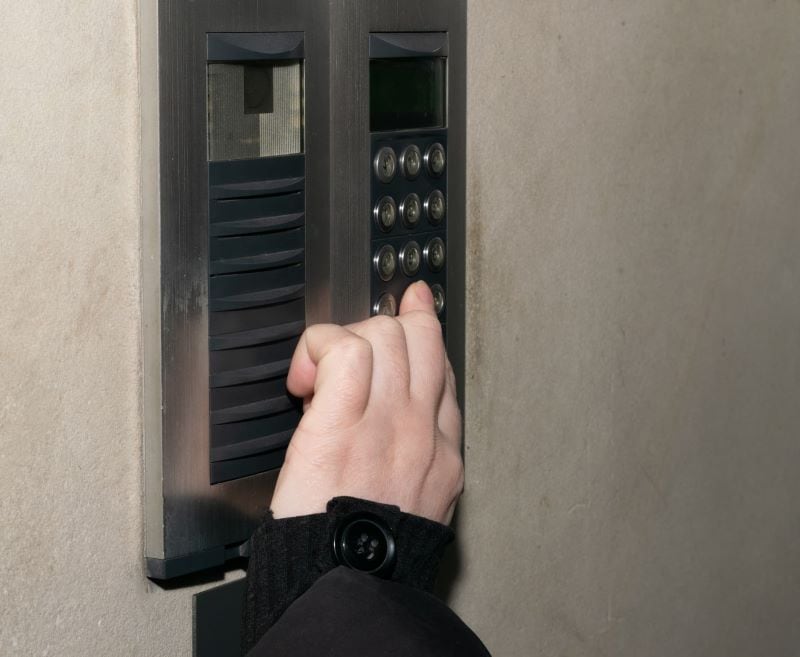
An intercom completes access control at entrances where you want to identify visitors before granting entry. IP video intercoms let your team see and speak with guests, couriers, and contractors, then release the door from a desk station, computer, or compatible mobile app. Depending on the system, features can include high-resolution colour video, infrared night vision, remote door release, and integration with access control.
Audio intercoms can support interior doors, communication between different areas, paging, and announcements. AMT Systems installs and integrates video, audio, and IP intercom systems for commercial and industrial properties, connecting them with electronic door locks, access credentials, and other security systems where supported.
Integrated Access Control, Cameras & Alarms
Access control becomes more useful when it works with the rest of your security system. As a commercial security integrator, AMT Systems can integrate access control with security cameras and alarm systems so events such as a forced or held-open door can trigger configured alerts and link to relevant camera footage. Instead of managing three disconnected systems, your doors, cameras, and alarms can work together as one coordinated security solution.

Access Control
Control who can enter


Serving Toronto & the GTA
AMT Systems installs and supports commercial access control systems across Toronto, North York, Scarborough, Etobicoke, Mississauga, Brampton, Vaughan, Markham, Richmond Hill, Oakville, Burlington, and surrounding GTA communities.
With more than 14 years of security and systems integration experience, our team handles projects from the initial assessment and system design through installation, training, and ongoing support.
Access Control Systems FAQs
Book a Consultation
Tell us about your property — an office, warehouse, condo, clinic, or multi-site operation — and a specialist will walk it opening by opening, then deliver an itemized, no-obligation quote for the right access control system. Call 647-601-0777 or request your free assessment — we serve Toronto and the GTA with one accountable local team, available 24/7.